



Our team works with you during every phase of the project.
Contact Us

Site hoarding looks like the simplest product on any construction project and is treated accordingly — until a storm takes a run down. A 2.4 m solid panel is a substantial wind sail, and the difference between a hoarding that survives a winter and one that ends up in the road is almost entirely in the posts and the returns, not the panel face.
Four functions, often conflated:
| Function | What it demands |
|---|---|
| Public separation | Continuous, no gaps, no climbable detail |
| Wind resistance | Posts, footings and bracing sized for the site exposure |
| Visual screening | Opaque face, and a finish that can be branded |
| Noise reduction | Mass and sealing — a plain hoarding does very little |
The fourth is the one most often assumed rather than specified. A standard plywood or thin steel hoarding has almost no acoustic mass; if the site has a noise condition, an acoustic hoarding is a different product, not a decoration on the same one.
| Type | Typical use | Limitation |
|---|---|---|
| Timber or plywood on frames | Short projects, low exposure | Short life, poor acoustic performance, catches wind fully |
| Solid steel panels | Longer projects, branded city-centre sites | Needs proper posts; heavier to handle |
| Mesh or open panels | Where visibility or wind passage is required | Does not screen visually or acoustically |
| Acoustic hoarding | Sites with a noise condition | Cost and weight; needs a designed base detail |
A solid panel is a wall, and it should be designed as one. The practical consequences:
Height drives everything. Wind load rises with the square of wind speed and with the height of the panel above ground; a 2.4 m solid hoarding is a materially different structure from a 1.8 m one.
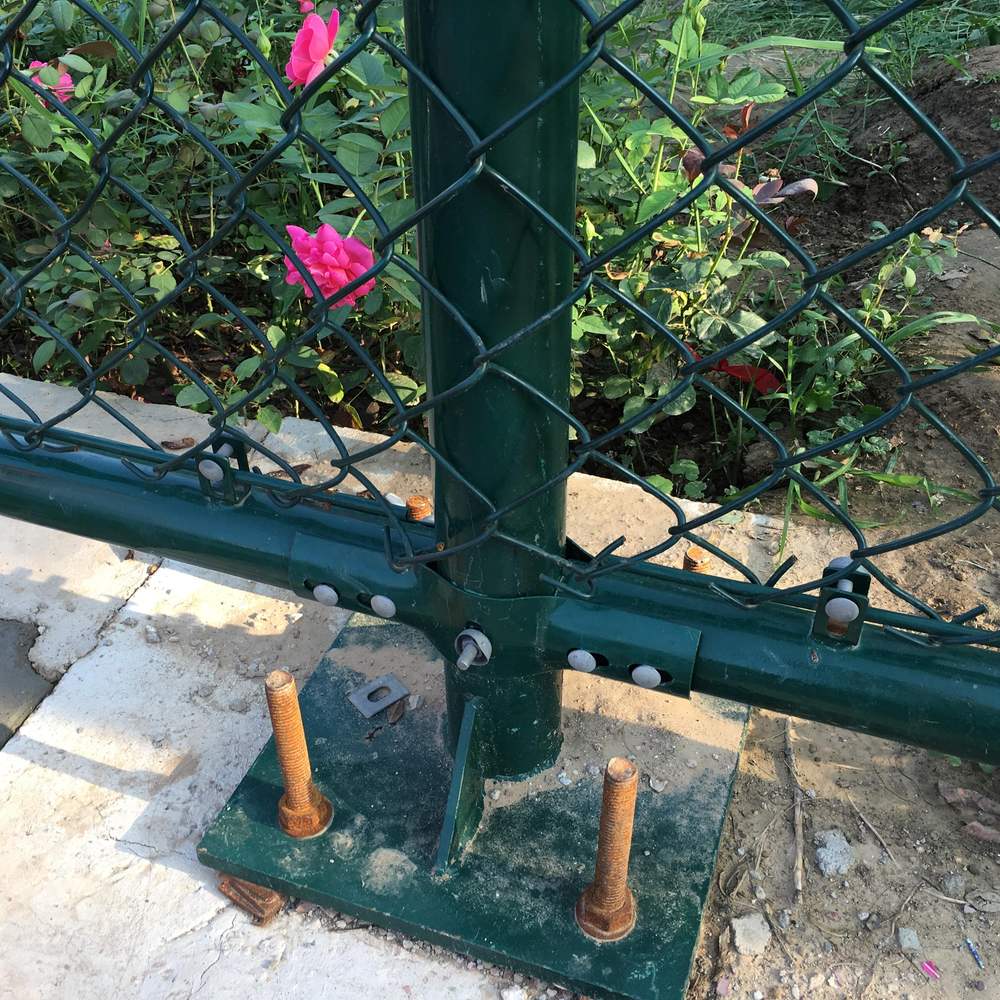
Posts carry the moment. Spacing that works for a mesh panel will not work for a solid one. Footings need to suit the ground, not a standard detail.
Returns matter more than the face. A hoarding that turns a corner without a return leg presents an open edge to the wind and starts to peel from there.
Gaps are load concentrators. A missing panel in a long run increases the load on its neighbours and starts a progressive failure.
Where the site is exposed — a seafront, a hilltop, an open development plot — say so. It changes the post specification, and it is the single most useful piece of information a supplier can be given.
On urban sites with a noise condition, an acoustic hoarding can be the difference between permitted working hours and a restriction. What it needs:
Mass per square metre stated, as with any acoustic panel.
Sealed joints — a barrier with open vertical gaps leaks at exactly the frequencies the mass was bought to control.
No gap at the base — the detail that most often defeats an otherwise adequate hoarding.
Height above the line of sight between source and nearest receiver.
Height and sealing consistently matter more than the panel's headline rating, because a hoarding is short relative to the plant it is screening.
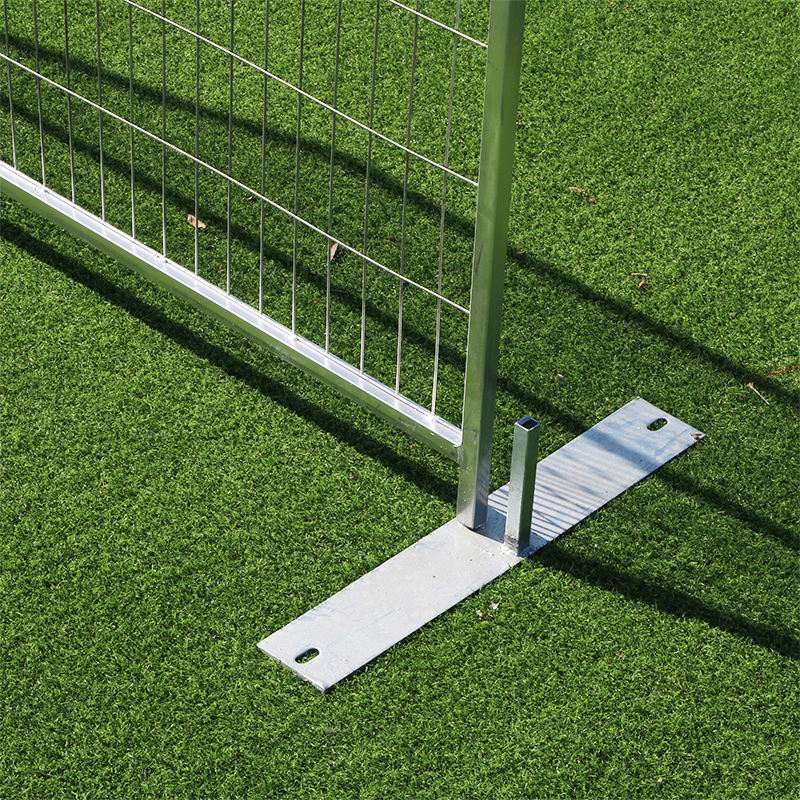
Base detail — panels fixed to a temporary block or kerb that was never designed for the moment.
Corner returns — omitted, leaving an open edge.
Gate posts — the gate is the most loaded element on the run and is often the lightest post.
Panel-to-post fixings — too few, or not rated for uplift.
Joints between panels — open, which is both a wind and an acoustic leak.
Total run length, height, and number of corners and gates.
Site exposure: open, urban, coastal, elevated.
Ground conditions where the posts will be founded.
Project duration, and whether the hoarding will be reused.
Any noise condition or working-hours restriction on the site.
Branding requirement and finish preference.
Related reading: temporary fence panel range, temporary fence installation and handling, and temporary noise barrier rent or buy.
There is no universal height that is exempt. Load depends on panel height, wind speed at the site, post spacing and footing. A 1.8 m hoarding on a sheltered site and a 2.4 m hoarding on an exposed one are different structures, and the post and footing specification should come from the exposure rather than from a default height.
Only slightly. A thin plywood or single-skin steel panel has very little mass, and short barriers need both mass and a sealed base to be effective. Where a noise condition applies, specify an acoustic hoarding and state the required reduction at the receiver.
Panels can be, if they are steel and were handled without distorting the frames. The posts and footings usually cannot, because they are specified for one ground condition. If reuse is intended, say so at the quotation stage so the panel detail is chosen for repeated handling.
Post rotation and corner failure in wind. Both trace back to the footing and the return detail rather than to the panel, which is why those two items should be described in any specification.
For drainage and to avoid trapping water, a small gap is normal — but it is an acoustic leak. Where the hoarding is also a noise barrier, the base detail should close the gap without creating a water trap, which usually means a sealing strip against a kerb rather than an open gap above ground.
Contact Us
Imfornation
Highway Noise Barrier Cost: What Drives the Price per Square MetreGabion Retaining Wall: Sizing, Drainage and Stone Fill29 STC Noise Barrier WholesaleFence Cost Per Metre: What Actually Moves the Price of a Boundary FenceAnti-Climb Fence Specification: 358 Mesh, Paladin Pales and 3D PanelsMetro Depot Noise Barrier: Enclosure for Depots and Over-Track Development2m High Noise BarrierSchool Noise Barrier: Cutting Traffic Noise at the ClassroomAluminum Alloy Noise Barrier Supplier6m High Noise Barrier4 Meter Noise Barrier PanelRailway and HSR Noise Barriers: Design for Speed and ClearanceConstruction Site Noise Barriers: Temporary Screens That Move With the Works358 Security Fence: Mesh, Wire and Anti-Climb SpecificationMining and Quarry Noise Barriers: Dust, Plant and Layout0.85 NRC Noise Barrier Wholesale1Noise Control Solutions1113D Curved Fence Panel ManufacturersResidential Noise Barrier: Height, Planning and AppearanceGabion Baskets for saleGabion Basket SupplierUrban Noise ControlInfrastructure Noise Control3D-Welded Mesh fencing systemIndustrial Plant Noise Barrier: Boundary Wall and Equipment EnclosureConstruction Site Fencing: Temporary Panels, Welded Mesh or HoardingNoise barriers costGabion Mattress: Channel Lining and Scour ProtectionTemporary Noise Barrier: Rent or Buy, and What Drives CostSubstation and Transformer Noise Barriers: Controlling Low-Frequency HumCooling Tower Noise Barrier: Layout, Airflow and Panel DesignDouble Wire Fence: 868 and 656 Panels, Posts and FixingsAirport Noise Barrier: Ground Noise, Run-Up and PlantHospital Noise Barrier: Ward Targets, Height and CleanabilityConstruction Hoarding Panels: Wind Load and Site BoundariesData Centre Cooling Noise: Louvre Screens and AirflowNoise Barrier Wind Load: Posts, Spacing and FoundationsPerforated Metal Noise Barrier: Open Area and AbsorptionMetal Noise Barrier ManufacturerNoise Barrier Panel Specifications: The Six Numbers5m High Noise BarrierSolar Noise Barrier Cost: What Drives the Price and the PaybackIndustrial Noise Barrier System