Our team works with you during every phase of the project.
Contact Us
November. 27, 2026
Choosing between Palisade Fencing and Paladin Mesh Fencing involves more than comparing their appearance. Both are designed for perimeter security, but their structural designs, anti-climb characteristics, visibility, installation requirements, and suitability for different environments vary.
For contractors, distributors, and project buyers, the right choice depends on the required security level, site layout, environmental conditions, maintenance expectations, and overall project specifications.
The primary difference lies in their construction.
Palisade Fencing is constructed from individual vertical steel pales fixed to horizontal rails and supported by posts. The pales typically feature D-shaped or W-shaped profiles, with pointed or angled tops designed to create a visible physical deterrent against unauthorized access.
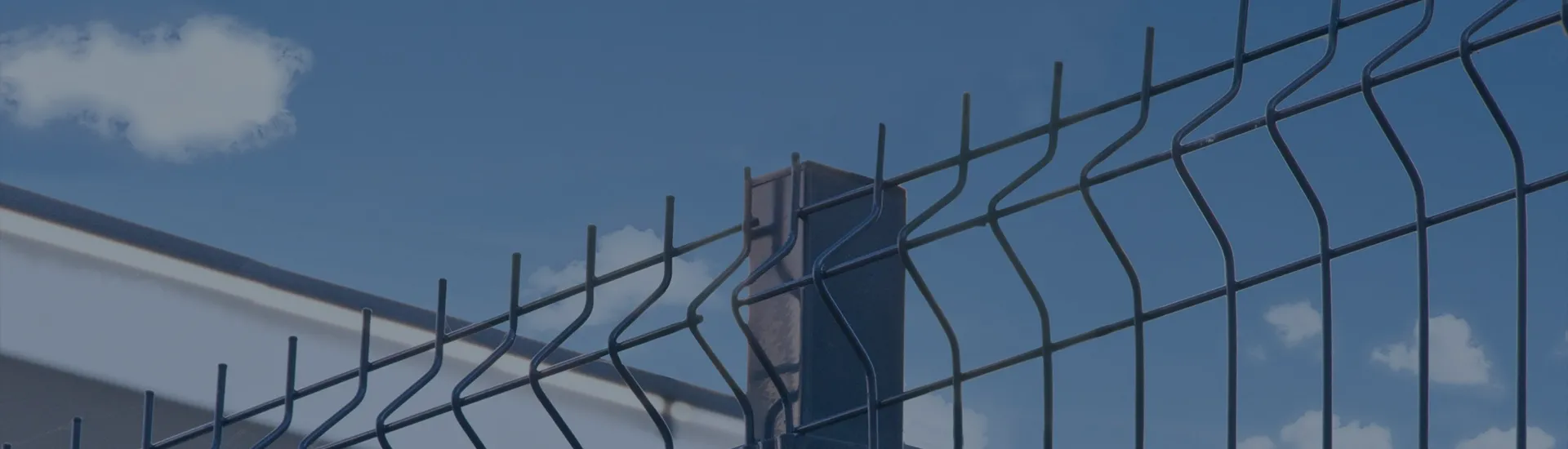
Paladin Mesh Fencing is a welded wire security fencing system featuring a distinctive striped appearance and reinforced V-shaped bends. Its vertical and horizontal steel wires are welded at their intersections to form rigid mesh panels. Additional reinforcement in the V-bend sections improves panel rigidity while maintaining visibility through the fence.
Unlike conventional vertical-bar fencing, Paladin mesh combines a reinforced panel structure with an open mesh design, making it suitable for projects requiring both perimeter protection and visual supervision.
The following comparison highlights the main technical and practical differences that project buyers should consider.
| Comparison Factor | Palisade Fencing | Paladin Mesh Fencing |
|---|---|---|
| Main Structure | Vertical steel pales attached to horizontal rails | Precision-welded steel wire mesh panels |
| Design | D-shaped or W-shaped vertical pales | Striped mesh with reinforced V-bends |
| Security Approach | Strong physical and visual deterrent | Anti-climb mesh structure and reinforced welded panels |
| Visibility | Relatively restricted, depending on pale spacing | Open mesh design provides clear visibility |
| Panel Rigidity | Depends on pale thickness, rail design and connections | Enhanced by welded intersections and V-bend reinforcement |
| Appearance | Traditional, imposing security appearance | Modern, uniform and less visually obstructive |
| Installation | Individual pales, rails and posts require assembly | Modular panels attached to supporting posts |
| Maintenance | Individual pales can be replaced | Damaged sections may require panel replacement |
| Corrosion Protection | Commonly galvanized or powder-coated steel | Hot-dip galvanized or powder-coated steel |
| Typical Applications | Industrial compounds, utilities and high-security boundaries | Factories, warehouses, schools, residential communities and infrastructure |
Neither system is automatically superior in every situation. Actual security performance depends on fence height, material specifications, fixing details, foundations, installation quality, and the overall perimeter security design.
Palisade fencing is commonly selected for sites where a strong physical and visual security boundary is a priority.
1. Strong Visual Deterrence
The vertical steel pales and pointed tops create an imposing appearance that clearly communicates restricted access. This makes palisade fencing suitable for industrial compounds, utility facilities, and other restricted areas.
2. Individual Component Replacement
Since the system consists of separate pales, rails, and supporting components, individual damaged pales can often be replaced without removing the entire fence section.
3. Flexible Site Configuration
The individual components allow adjustments to fence layouts, heights, and boundary configurations according to project requirements.
Its relatively enclosed visual appearance may not suit locations requiring unobstructed visibility.
The pointed and industrial-style appearance may be less appropriate for schools, residential communities, and public-facing commercial properties.
On-site assembly of individual components can involve more installation work than modular mesh panel systems.
Its suitability for projects with specific visual or architectural requirements may be limited.

Paladin mesh fencing offers a different approach to perimeter protection. Its reinforced welded mesh construction combines structural rigidity, visibility, and a distinctive appearance.
One of the defining features of Paladin mesh fencing is its V-shaped reinforcement.
The pressed V-bends increase the structural stiffness of the welded mesh panel compared with a flat mesh configuration. Additional reinforcement wires within these sections further support the panel structure.
For contractors, this design helps maintain panel rigidity across the fence span and provides a stable structure when installed with appropriately specified posts and connections.
Paladin mesh fencing uses closely arranged welded steel wires to create a barrier that is difficult to climb or penetrate.
The mesh configuration limits convenient footholds, while the welded intersections help prevent individual wires from being easily separated.
The actual resistance to cutting and climbing depends on wire diameter, mesh opening, panel height, fixing arrangements, and the security requirements of the project.
Unlike more visually enclosed fencing systems, Paladin mesh fencing allows security personnel to observe activities on both sides of the boundary.
This is particularly useful for facilities requiring:
CCTV monitoring and security patrols.
Clear visibility around entrances and access points.
Supervision of school grounds and sports facilities.
Visual management of warehouse and industrial perimeters.
Surface treatment is an important consideration when selecting outdoor steel fencing.
Hebei Jinbiao Paladin mesh fencing is available with hot-dip galvanized or powder-coated finishes. These treatments help protect the steel against corrosion and environmental exposure.
For projects in coastal, humid, or industrial environments, buyers should specify the required coating system according to local environmental conditions and expected service life.
Paladin mesh fencing uses prefabricated panels connected to supporting posts through compatible fixing accessories.
Compared with assembling individual vertical pales and horizontal rails, its modular panel arrangement can simplify on-site installation, particularly for long, relatively straight fence lines.
Panel dimensions, post configurations, and fixing accessories should be coordinated before production to ensure proper installation.
The most suitable fencing system depends on the security requirements and operating environment of each project.
| Project Application | Recommended Fencing | Selection Reason |
|---|---|---|
| Industrial Facilities | Palisade or Paladin Mesh | Palisade provides a strong visual deterrent, while Paladin offers visibility and reinforced mesh protection. |
| Warehouses and Logistics Centers | Paladin Mesh | Open mesh supports perimeter surveillance and access management. |
| Schools and Educational Facilities | Paladin Mesh | Provides boundary protection while allowing staff to observe surrounding areas. |
| Residential Communities | Paladin Mesh | Its modern appearance and open structure are suitable for residential boundaries. |
| Power Stations and Utility Facilities | Project-Specific Selection | Consider security risk, climbing resistance, visibility and additional security measures. |
| Sports Facilities and Parks | Paladin Mesh | Open mesh design supports visibility and supervision around activity areas. |
| Restricted Industrial Compounds | Palisade Fencing | Its imposing appearance provides a clear visual warning against unauthorized entry. |
| Transportation Infrastructure | Project-Specific Selection | Consider visibility, access control, boundary layout and operational security requirements. |
For projects where visual supervision, modern appearance, and modular installation are important, Paladin mesh fencing is often a practical option.
For B2B buyers, selecting a fencing system requires evaluating more than the initial product price.
The following factors should be confirmed during the specification and quotation process.
1. Required Security Level
Determine whether the project primarily requires visual deterrence, anti-climb protection, resistance to cutting, or a combination of these functions. Fence height, mesh opening, wire diameter, and fixing arrangements should match the security requirements.
2. Fence Height and Panel Dimensions
Confirm the required fence height, panel width, and total perimeter length. These dimensions influence post spacing, the number of panels, transportation, and installation arrangements.
3. Wire Diameter and Mesh Configuration
For Paladin mesh fencing, wire diameter and mesh opening directly affect the panel's physical characteristics. Buyers should confirm the required horizontal and vertical wire specifications and reinforcement configuration.
4. Surface Treatment
Consider the installation environment and expected exposure to moisture, salt, and industrial pollutants. Hot-dip galvanizing and powder coating can be specified according to project requirements.
5. Post and Fixing System
The supporting posts, brackets, clamps, and fasteners must be compatible with the selected fence panels. Foundation conditions and installation methods should also be considered.
6. Total Project Cost
Compare the complete installed system rather than only the price per panel. Include posts, accessories, foundations, transportation, installation labor, and long-term maintenance requirements.
Hebei Jinbiao provides Paladin mesh fencing solutions for industrial, commercial, residential, and infrastructure projects.
Our Paladin fence panels are manufactured using precision-welded steel wire and a reinforced V-bend structure to provide panel rigidity, anti-climb performance, and clear perimeter visibility.
Key product and supply capabilities include:
Reinforced Panel Structure: Welded mesh panels with pressed V-bend reinforcement.
Multiple Surface Finishes: Hot-dip galvanized and powder-coated options.
Flexible Specifications: Customizable panel dimensions, wire diameters, mesh configurations, colors, and post systems.
Modular Fence System: Matching posts and fixing accessories for coordinated installation.
Manufacturing Experience: Over 30 years of experience in welded mesh fencing manufacturing.
Whether you are sourcing fencing for a warehouse, industrial facility, school, residential development, or infrastructure project, our team can help you identify suitable Paladin mesh fence specifications based on your application and project requirements.
Explore our Paladin Mesh Fence product details or contact Hebei Jinbiao to discuss your fencing requirements and request a quotation.
Both systems provide perimeter security, but their security characteristics differ. Palisade fencing provides a strong visual deterrent through its vertical steel pales and pointed tops, while Paladin mesh fencing uses closely spaced welded wires and reinforced V-bends to provide anti-climb protection and structural rigidity. The better choice depends on the required security level and actual product specifications.
The overall cost depends on material specifications, fence height, surface treatment, accessories, transportation, and installation labor. Paladin mesh fencing may offer installation efficiencies through its modular panel design, but buyers should compare complete project quotations before making a decision.
Yes. Paladin mesh fencing can be specified for security-sensitive perimeter applications. Its wire diameter, mesh opening, panel height, reinforcement, post system, and fixing arrangements should be selected according to the project's security assessment. Additional security measures may be required for high-risk sites.
Yes. Its open welded mesh structure allows people to see through the fence, making it suitable for sites that require CCTV monitoring, security patrols, and visual supervision.
Yes. Hebei Jinbiao offers customization options for panel dimensions, wire diameters, mesh configurations, surface finishes, colors, and post systems according to project requirements.
Hot-dip galvanizing and powder coating are available options. The appropriate finish depends on the local environment, corrosion exposure, and project durability requirements.
September. 16, 2025
March. 07, 2026
March. 11, 2026
March. 12, 2026
March. 17, 2026