


Our team works with you during every phase of the project.
Contact Us

October. 30, 2026
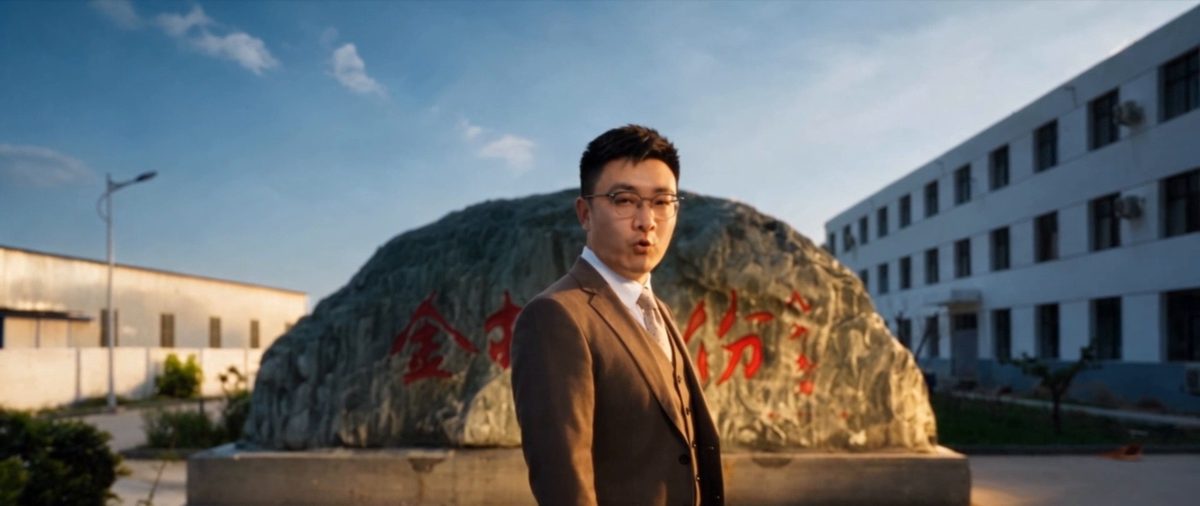
Jinbiao Group has released a corporate film setting out how it supplies overseas buyers from three separate manufacturing bases in Hebei, Hainan and Vietnam, rather than from a single export plant. The film runs five and a half minutes and is presented by Lu Qianli. It opens on the two questions the company says it hears most often from distributors and project buyers: whether capacity can hold when a large order lands, and whether quality holds with it.
The film divides the business by function rather than by product. Hebei is described as the ballast, carried by capacity and quality. Hainan is the tailwind, carried by cost and route. Vietnam is the springboard, into ASEAN and beyond.
That division matters because the three problems it answers are different. A buyer waiting on a shipment is asking about capacity. A buyer comparing landed cost is asking about duty. A buyer entering Southeast Asia is asking about proximity to the market. No single plant answers all three, which is the argument the film makes for running them as one system.
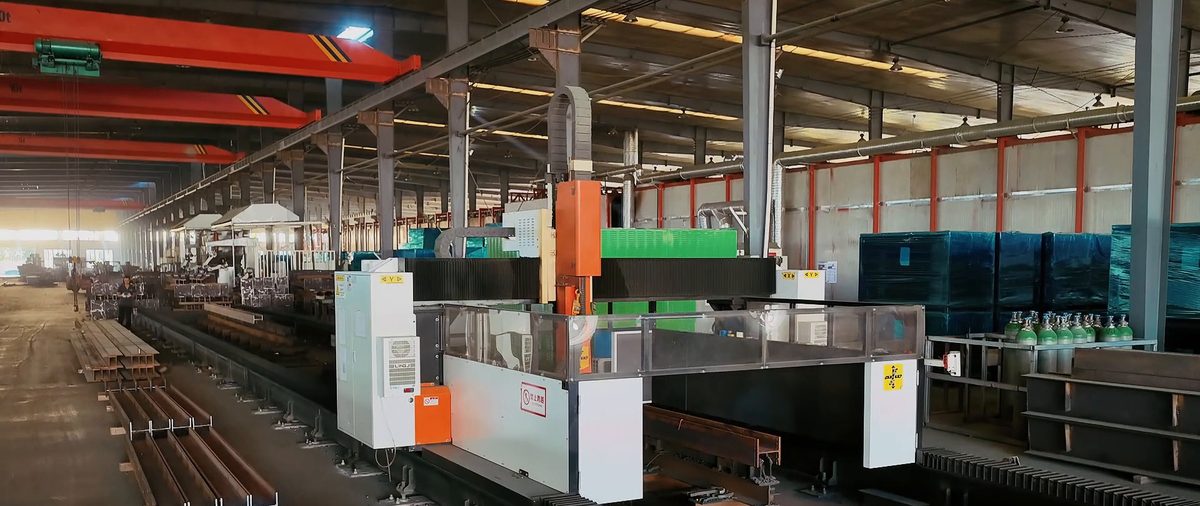
The home base is a smart production park in Shenzhou and Anping, Hebei. The film shows automated lines covering noise barriers, fencing, solar carports, storage units and forklifts, arranged so that raw material enters at one end and finished goods leave at the other. Separate warehouses hold incoming material and dispatch stock.
The point being made is about load, not capability. A production line can be modern and still fail a buyer if it cannot absorb a large order without stretching delivery dates. The film presents the park as the answer to that specific risk: standardised steps, dedicated material storage and dedicated finished-goods storage, so that volume does not come at the cost of the date promised.
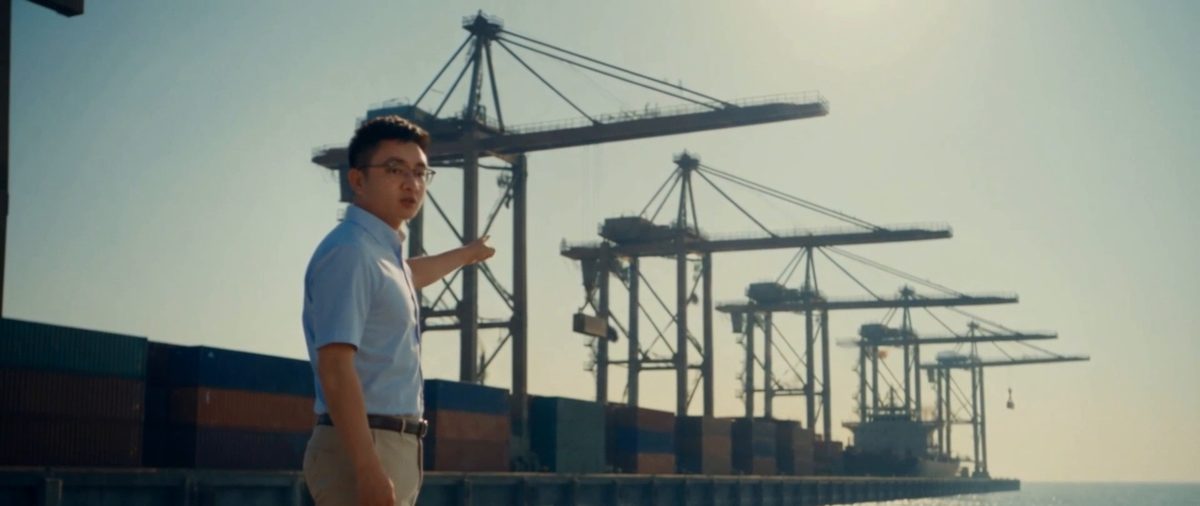
The second base sits at Jinpai Port, which the film describes as a key park of the Hainan Free Trade Port, minutes from expressway and rail. The port handles bulk and containers, the Pinglu Canal connects it to the sea, and the New Western Land-Sea Corridor connects it inland.
The policy case is set out as four points:
Zero duty on import. More than 6,600 tariff lines enter at zero duty, so imported raw material and equipment arrive without the duty loading.
Thirty per cent value added. Goods processed inside the park that gain more than 30 per cent in value can be sold into the mainland duty free.
Fifteen per cent corporate tax. Encouraged-industry enterprises pay 15 per cent corporate income tax rather than 25 per cent.
Fifteen per cent personal tax cap. Qualifying high earners working in Hainan pay no more than 15 per cent personal income tax.
Taken together, the film argues, the four points change the cost base of an export business rather than merely simplifying its paperwork. Raw material lands without duty, processing adds value inside the park, and the finished goods can move either into the mainland or out to sea. Bonded repair, remanufacturing and processing projects that qualify can be located in the park's ready-built base, which removes the need to acquire land and build from scratch.
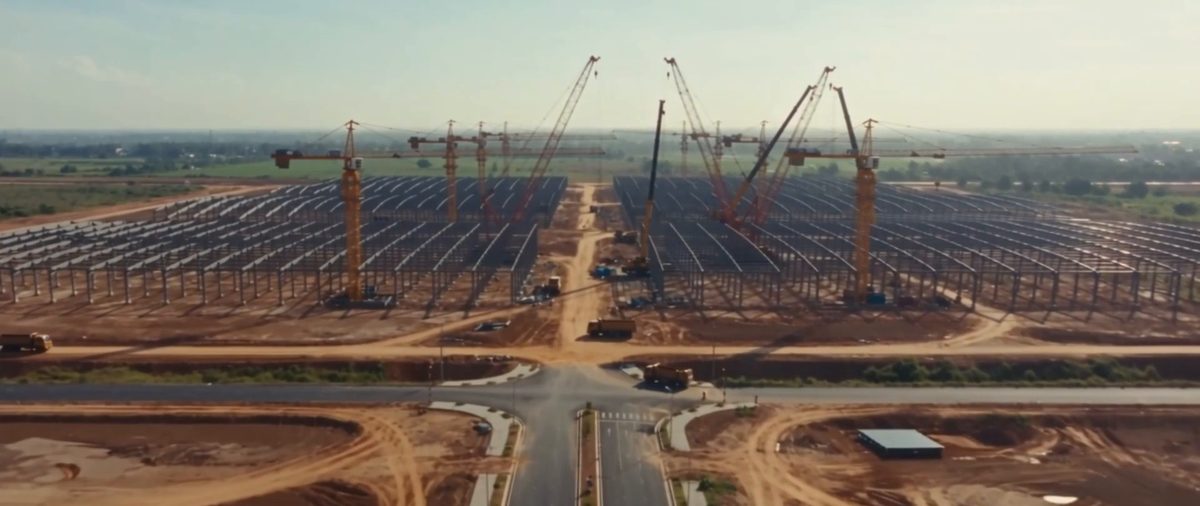

The third base is already running. In an industrial zone in Ho Chi Minh City the group operates two parks producing fencing, barriers, noise barriers and solar mounting.
The film's case for Vietnam is market-driven: a population of 100 million, a young workforce, infrastructure spending across highways, industrial parks and solar projects, demand running ahead of supply, and a position on the main international shipping lane inside RCEP rules, which puts the whole of ASEAN within reach.
For companies that want that position without building it themselves, the film sets out two routes. The first is asset-light: use the existing factories, the local team and the supply chain, and avoid starting from zero. The second is a fifty-fifty co-build model, with a shared site, shared equipment and shared resources, and risk split evenly. Both come with shared office, warehousing and factory space, and a local team that handles registration, filings, approvals, agency work and park operations.
For a distributor or contractor reading this from Europe, the Middle East or Africa, the immediate question is what three bases do for a quotation. Three things, in practice.
Capacity is no longer a single point of failure. If one base is committed, the group can shift volume rather than quote a date it cannot hold. Tariff exposure can be managed, because goods can be routed through a free trade port or through Vietnam depending on the destination and the rules that apply to it. And for projects in Southeast Asia, supply can come from inside the region rather than across it.
What the film does not do is publish prices, and it does not name the buyers behind the projects shown. That is consistent with how the company has presented its project pages elsewhere on this site: scope stated as manufacture and supply, with erection handled by the project's own contractor.

Buyers who want to test the three-base structure against a live enquiry can send the specification, the destination port and the required delivery window through the contact page. The film is available on request.
All images in this article are stills from the Jinbiao Group corporate film.
September. 16, 2025
March. 07, 2026
March. 11, 2026
March. 12, 2026
March. 17, 2026
