Our team works with you during every phase of the project.
Contact Us
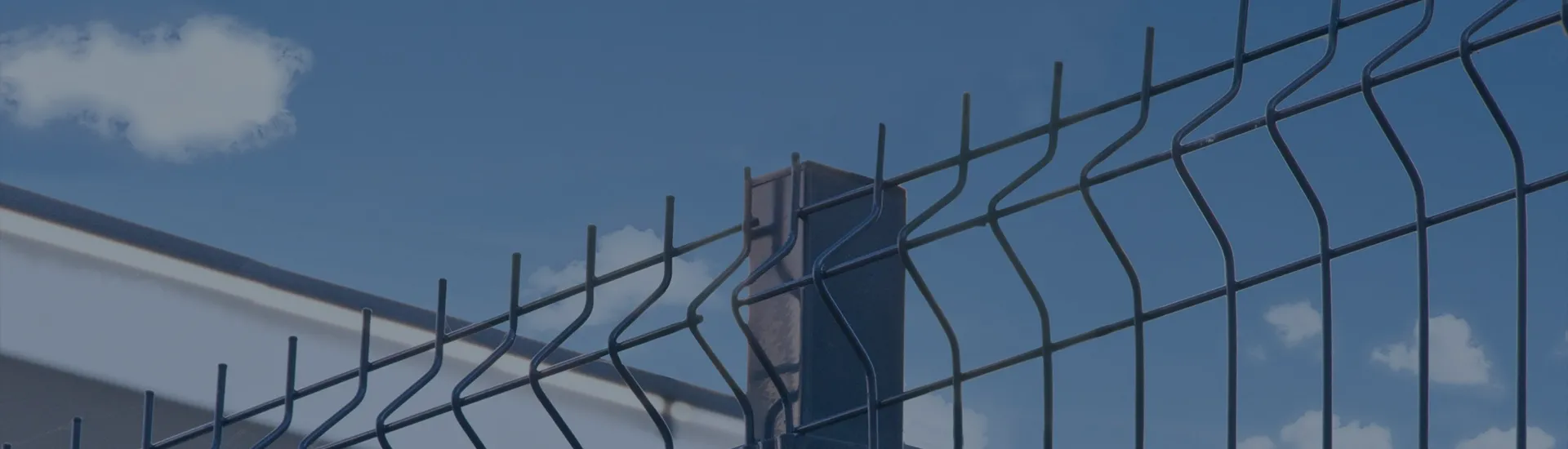
Mesh Fence
Thailand's rail network is being expanded and upgraded, and every new section of track adds corridor that has to be kept clear. This project covers boundary fencing along a rail corridor where the alignment runs at grade past farmland and villages — the places where people and livestock most often get onto the track.
Our scope was the manufacture and supply of the fence panels, posts and fixings. Ground works, the concrete plinth and erection were carried out by the project contractor.

Welded wire mesh panels in a green finish, sized to the corridor's post spacing
Posts with caps, fixed along the concrete plinth at the corridor edge
Panel-to-post fixings and brackets for assembly on site
Panels packed by section, so the contractor can close the line in sequence
Two things drive it. The first is safety: a fence is the only physical barrier that stops people, cattle and motorbikes crossing the track between formal crossings, and on a corridor running through farmland those crossings happen daily. The second is land: Thailand's railway reserves are long narrow strips, and fencing the boundary is how the line of the reserve is held against encroachment.
The climate then sets the specification. High humidity, a long monsoon and standing water at the base of the fence are what shorten the life of a boundary fence here, which is why the coating matters more than the wire gauge.
The fence follows a concrete plinth rather than being set directly into the ground. The plinth gives a level, well-drained base along the corridor edge and keeps the bottom of the panels clear of standing water in the wet season. Panels are fixed between posts at a consistent height so the fence reads as one continuous line along the alignment and leaves no gap at the base for animals to push through.
It is the perimeter fence that runs along a rail corridor, separating the track from the land beside it. It keeps people, livestock and vehicles off the track between formal crossings, protects the railway reserve from encroachment, and gives the operator a defined boundary to inspect and maintain.
Height is set by the operator's right-of-way requirement and by the risk at that section, not by one national figure. Stations, level crossings and stretches running through communities usually call for a taller, climb-resistant fence than open rural corridor. We manufacture to the height in the project specification rather than to a single stock size.
Welded mesh gives a rigid panel with a small aperture, which is what stops livestock and makes the fence hard to push through; it is the usual choice for corridor boundary work. Chain link is more flexible and cheaper over long runs but easier to deform. Barbed wire is a topping, not a barrier on its own, and is normally added above a mesh fence where climbing is the risk.
Both work, and the choice follows the foundation. Steel posts are quicker to set and easier to align over long runs, and are usually used where the fence sits on a plinth. Concrete posts need no coating maintenance but are heavier, need lifting plant and are harder to replace if a vehicle strikes the line.
It is priced per metre of completed run, and the figure moves with panel height, wire diameter and aperture, coating system, post spacing and whether the posts sit in a plinth or in ground. Long corridor runs are usually cheaper per metre than short sections because mobilisation is spread over more panels. Send the corridor length, required height, post spacing and the coating you have specified, and we will price against your bill of quantities.
That depends on the coating, not on the mesh. A zinc layer under the outer finish is what carries the fence through the wet season; the failure point is normally the bottom of the panel and the post base, where water sits and where cut ends are left exposed. Specify the coating class for the corrosion category of the site, and touch up cut ends and site welds before handover.
Climbing is handled by panel height and a topping — a smaller upper aperture or an angled topping makes the panel hard to get a footing on. Cutting is handled by wire diameter and mesh size: a small aperture with heavier wire takes far longer to get through than a wide mesh. Both need to be matched to the risk at that section rather than applied to the whole corridor.
An annual walk of the line, checking post alignment, panel fixings and any coating damage at the base, plus clearing vegetation that traps moisture against the mesh. Damage from vehicles or theft is normally repaired panel by panel, which is why modular panels are easier to maintain than a continuous woven run.
Send the corridor length, required fence height, post spacing, coating specification and destination port, and we will confirm the panel schedule and price for your bill of quantities. Jinbiao has manufactured fencing for railway, highway and boundary projects since 1990.

A railway boundary fence runs the length of a rail corridor to keep people, livestock and vehicles off the track. For this project in Thailand, green welded mesh panels were supplied on posts set along a concrete plinth at the corridor edge, closing the line against unauthorized access where the alignment passes close to farmland and communities.

In 2024 Hebei Jinbiao manufactured and supplied BRC double wire fencing for a 50,000-bird commercial poultry farm in Mongolia, where the perimeter has to keep foxes and wolves out and define the biosecurity boundary. The blue PVC coated panels are stiffened by V bends and carried on square posts, with the gate set as the single controlled entry.

In 2023 Hebei Jinbiao manufactured and supplied the security boundary fence for a critical infrastructure site in Guyana: anti-climb welded mesh panels carried on a concrete block wall, specified for a tropical climate where corrosion, not impact, sets the service life.

This Ghana sports court project features a black welded wire mesh perimeter fence around the playing area. The visible installation uses modular mesh panels and posts set on concrete bases, with higher fence sections positioned to help contain balls near the court.