CA Temporary Fence
CA Temporary Fence
Welded Temporary Wire Mesh Fence



Welded or Woven
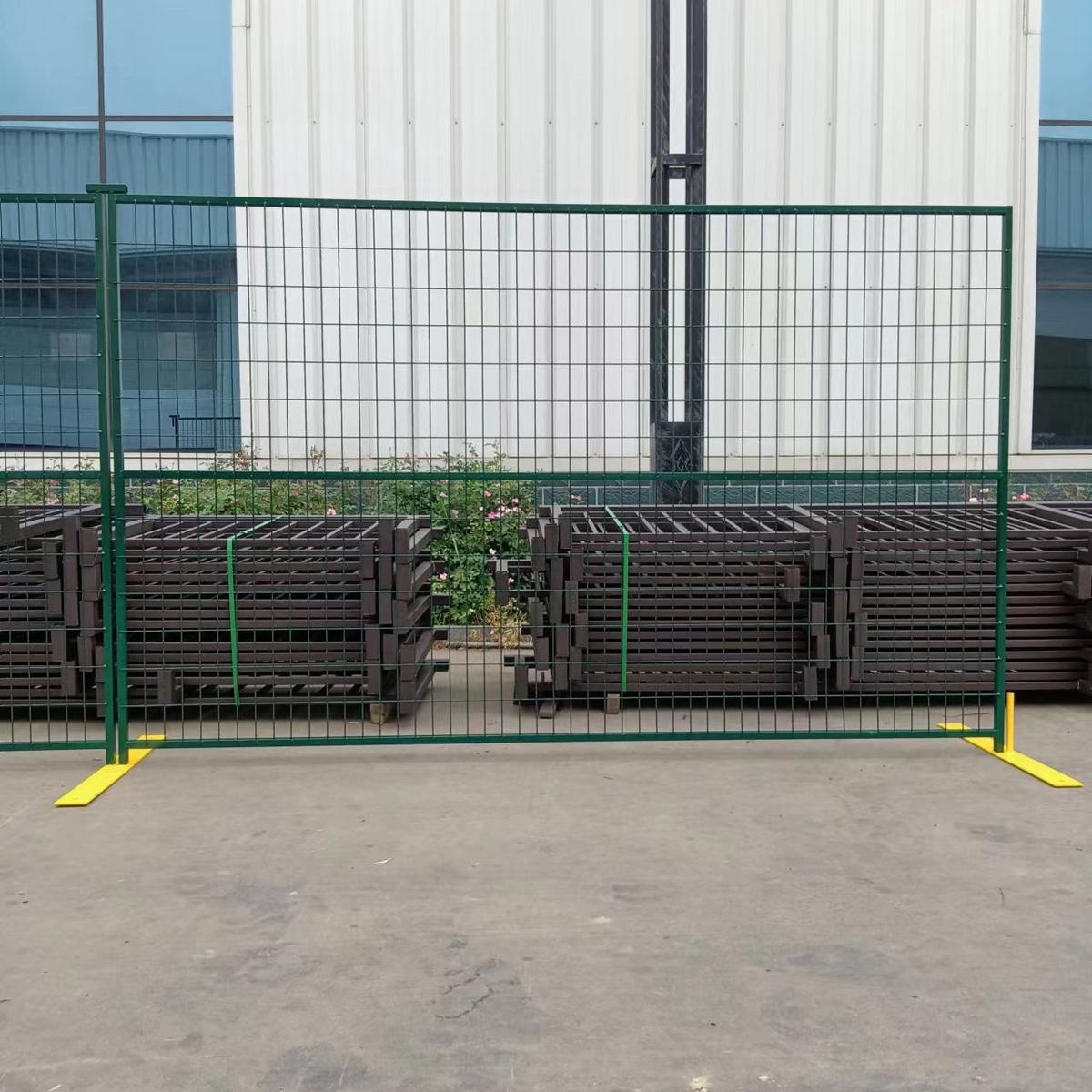
A temporary panel is either a welded grid or a chain link mesh stretched in a frame. Welded holds its shape and cuts cleanly; chain link flexes and is harder to cut, which is why both are still sold.
On a site where the fence is moved often, the welded panel wins on handling. Where the fence is expected to be cut, chain link resists longer.
Why Welded Holds Shape
A welded panel gets its stiffness from the grid itself, so it does not depend on being tensioned between posts. That is what allows it to stand in a portable foot with no anchorage.
A woven mesh needs tension to be rigid; in a portable frame it relies on the frame, and the mesh drums when the frame moves.

Mesh and Wire

Common mesh is 50 x 100 mm or 50 x 200 mm on 3 mm to 4 mm wire. A tighter mesh raises weight and cost and reduces the ability to see through the fence, which matters on a site where visibility is part of the safety plan.
Wire below 3 mm on a temporary panel dents at the first knock and stays dented.
Panel Weight and Handling
A 2.1 m by 2.4 m welded panel in 3 mm wire weighs around 15 to 20 kg. That is a two-person lift and the reason panels are stacked flat rather than carried upright.
Heavier panels need a machine to move, which changes the whole logistics plan on a site with a short programme.


Repair and Replacement
A damaged welded panel cannot be pulled back into shape the way a woven one can. In practice it is replaced, so a small stock of spares on site is cheaper than a mid-project order.
Panels are coupled rather than welded to each other, so a single panel comes out without disturbing the run.
What to Send

Send panel size, mesh aperture and wire diameter, frame tube, finish, foot type, quantity, number of spares and the port of discharge.


