
CA Temporary Fence
CA Temporary Fence
Galvanised Temporary Fence Panels


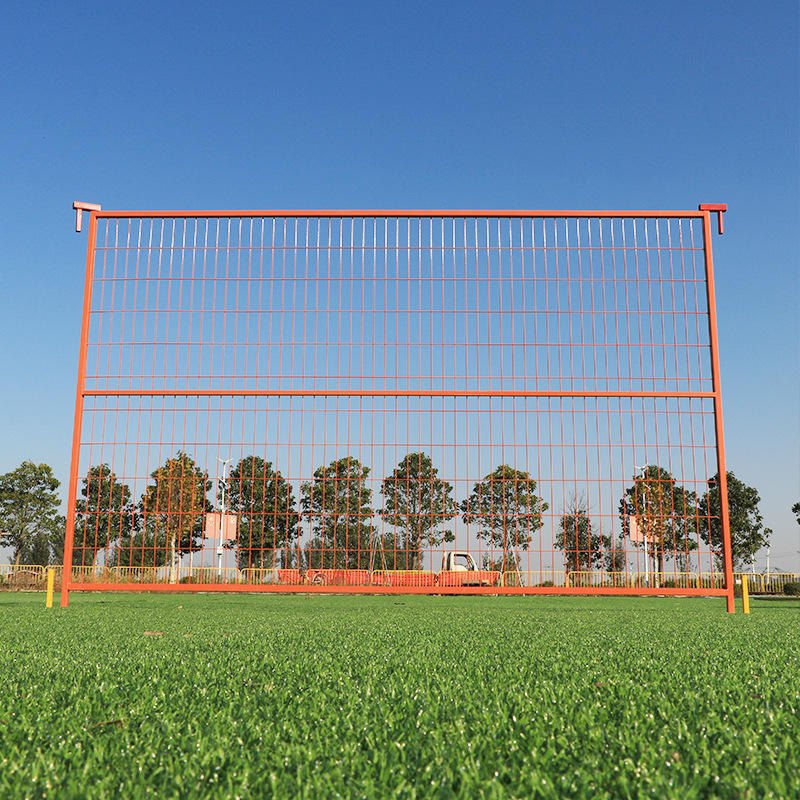

What a Temporary Panel Is
A temporary fence panel is a welded frame with mesh inside, standing in a plastic or concrete foot instead of being dug in. It goes up on a surface that cannot be excavated and comes down without leaving a hole.
That is the whole logic of the product: the foot takes the place of a foundation, and the panel is light enough for two people to lift.
Panel and Foot
Panels are typically 2.1 m to 2.4 m wide and 1.8 m to 2.1 m high, welded from steel tube with a mesh infill. The foot is blow moulded plastic, sometimes filled with water or sand, or a concrete block.
The foot is also the weak point: a light plastic foot on a windy site will let the run walk. Weight and footprint both matter.

Coupling Panels Together

Panels join with purpose-made couplers on the frame uprights. A coupled run behaves as one line, which is what keeps it standing in wind; panels placed side by side without couplers lean apart.
At a corner the coupler allows an angle, and that corner panel takes more load than any other in the run.
Where It Is Used
Construction sites, event perimeters, road works, plant compounds, storage yards and any boundary that has to move as the work moves.
On a long perimeter the panels are usually hired rather than bought; on a site that runs for years, buying galvanised panels and moving them between phases is cheaper.


Packing for Export
Panels stack flat and nest, so a 40 ft container carries a large quantity when they are bundled rather than loose. Feet are packed separately, in counts that match the panel quantity.
Bundles are banded and labelled by size; mixed sizes in one bundle slow the site down and cost more in handling than they save in freight.
What to Send

Send panel height and width, mesh size and wire, frame tube size, finish, foot type, total quantity, couplers and the port of discharge.


