
CA Temporary Fence
CA Temporary Fence
Used Temporary Fencing Panels: What to Check


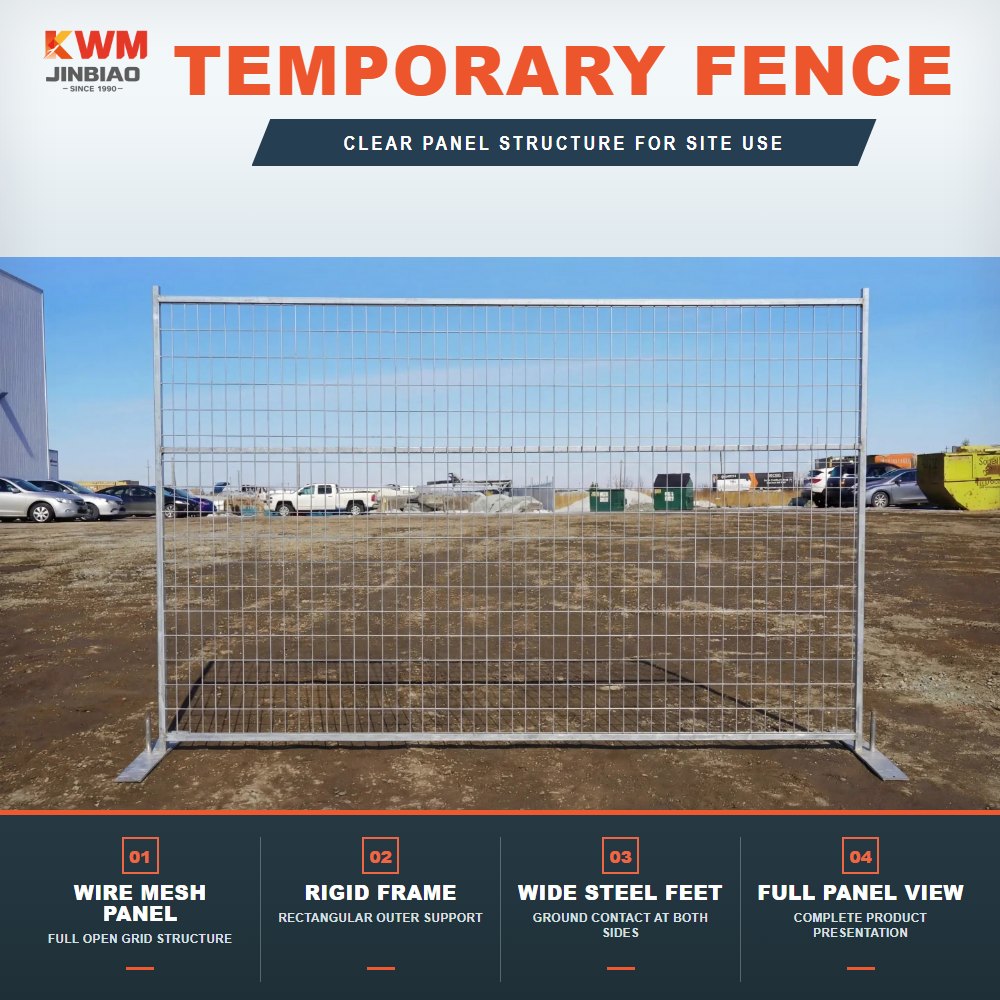

Why Used Makes Sense
A temporary panel does a short-term job and then sits in a yard. For a site that needs a boundary for three months, used stock at a lower price does the same work as new.
The saving is only real if the panels are inspected, because a temporary panel wears in places that are invisible in a photograph.
What to Inspect
Stand the panel on flat ground and sight along the top rail: a bent frame will not couple straight and the run will not line up. Check the welds at the corners and where the mesh meets the frame.
Feet crack at the socket, which is where the panel load concentrates. A cracked foot is the most common reason a used run leans.

Coating and Corrosion

Galvanised panels show white rust where water has sat, usually at the bottom rail and around the feet. Surface bloom can be cleaned; pitting at a weld cannot.
Coated panels should be checked at the couplers and frame corners, where the film abrades first.
Which Faults Are Repairable
A bent coupler, a missing foot and a slack chain link panel are all fixable. A twisted frame, a torn welded mesh or a rusted-through bottom rail are not worth repairing on a temporary panel.
Price a used lot against the cost of the parts it needs, not against the new price alone.


When New Is Better
If the site runs for years, or the fence will be reused on multiple projects, new panels with a known zinc weight cost less per year of service than used stock of unknown history.
For a one-off short programme, used is the rational choice.
What to Send

Send the quantity needed, panel size, run length, whether the panels must match an existing set, and the delivery address.


