
CA Temporary Fence
CA Temporary Fence
CA Temporary Fence Panel Sizes and Fittings


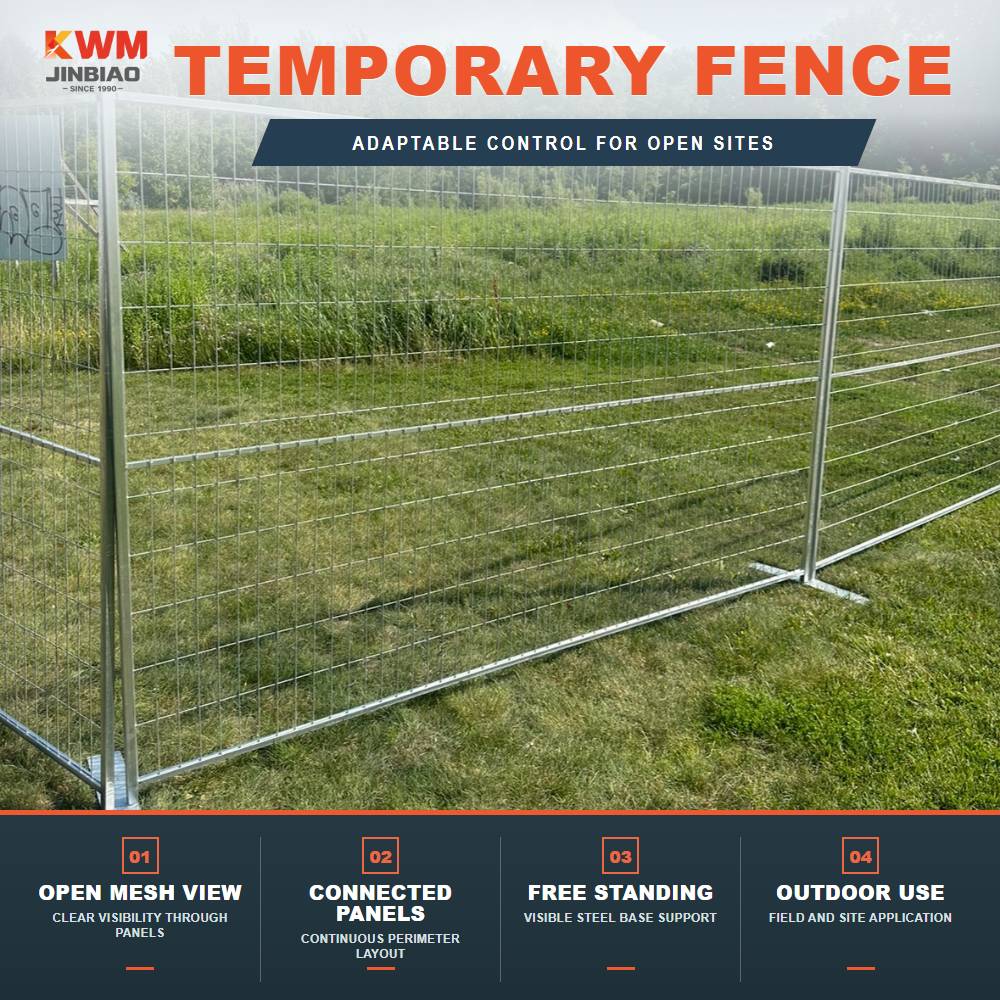

The Panel
The CA panel is a welded tube rectangle with mesh inside, usually 2.1 m high by 2.4 m wide. Height above that adds wind load faster than it adds security, and width is set by what two people can carry.
Tube wall thickness is the number that decides how the panel survives being stacked, dragged and dropped. It is also the first thing cut when a price looks unusually low.
Mesh and Wire
Common mesh is 50 x 100 mm or 50 x 200 mm on 3 mm to 4 mm wire. A tighter aperture raises weight and wind load without adding much stiffness.
Below 3 mm the mesh dents at the first knock and stays dented; on a hire fleet that shortens the life of the panel more than the coating does.

Feet

Feet are blow moulded plastic, often filled with water or sand on site, or concrete blocks. The foot is one per joint, so a run of ten panels needs eleven feet.
On a hard smooth surface a plastic foot slides: a rubber pad or a concrete block is the right choice there.
Couplers and Fixings
Panels join at the uprights with bolted couplers that allow a small angle. The coupler is where panels rub every time the run is moved, so a galvanised or coated coupler lasts far longer than a self-colour one.
Bolts should match the coupler material; mixed metals in a wet climate stain the panels within a season.


Parts List for a Run
A complete order is panels, feet at joints plus one, couplers at joints, gate frames and hinges where access is needed, and a small number of spare panels.
Missing feet is the most common shortfall on site, and it is the one that makes a run lean.
What to Send

Send panel size, mesh and wire, tube wall, coating colour, foot type and quantity, number of corners and gates, and the port of discharge.


