
CA Temporary Fence
CA Temporary Fence
AU Style Temporary Fencing for Construction


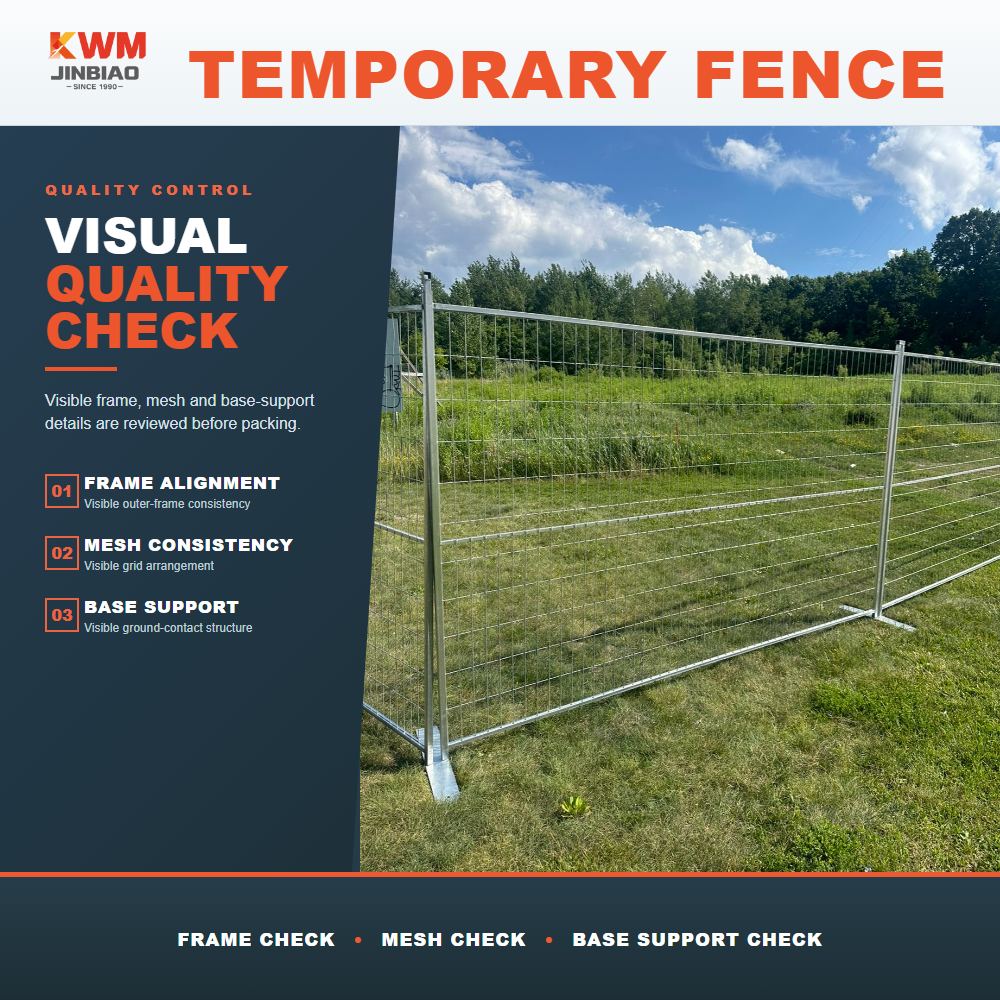

How AU Differs from CA
The two systems do the same job and are not interchangeable. The AU panel is generally a lighter, narrower module with its own foot profile and coupler, sized around local handling practice and the way Australian sites set out a boundary.
Mixing panels from the two systems in one run does not work: the couplers do not match and the feet do not align.
Tube and Mesh
The frame is a welded tube rectangle with a mesh infill, typically 50 x 150 mm or 50 x 100 mm on 3 mm to 4 mm wire. The tube wall thickness decides how the panel survives being dropped, dragged and stacked.
A thin wall dents at the first knock and stays dented, which is why hire fleets specify a heavier wall than the price list shows.

Feet and Stability

AU panels stand in blow moulded feet, often filled on site, or on concrete blocks. On a hard surface the plastic foot needs a rubber pad; on soft ground a filled foot sinks unless it has a wide base.
Wind is the real constraint: a free-standing run needs returns at the ends or heavier feet, or both.
Setting Out a Run
Set the corners first, then the gate posts, then fill the straight runs between them. A run that is set out from one end and worked forward usually ends up with an awkward last panel at the corner.
Couplers allow a small angle, so a gentle change of direction does not need a special part.


Where It Is Used
Construction perimeters, civil works, event boundaries, and any site where the fence has to be moved by two people without plant.
On a site with a long programme, buying the panels and moving them between phases is cheaper than repeated hire.
What to Send

Send panel height and width, mesh and wire, tube wall, finish, foot type, run layout with corners and gates, quantity and the port of discharge.


