
CA Temporary Fence
CA Temporary Fence
PVC Temporary Fence Panels for Australian Sites


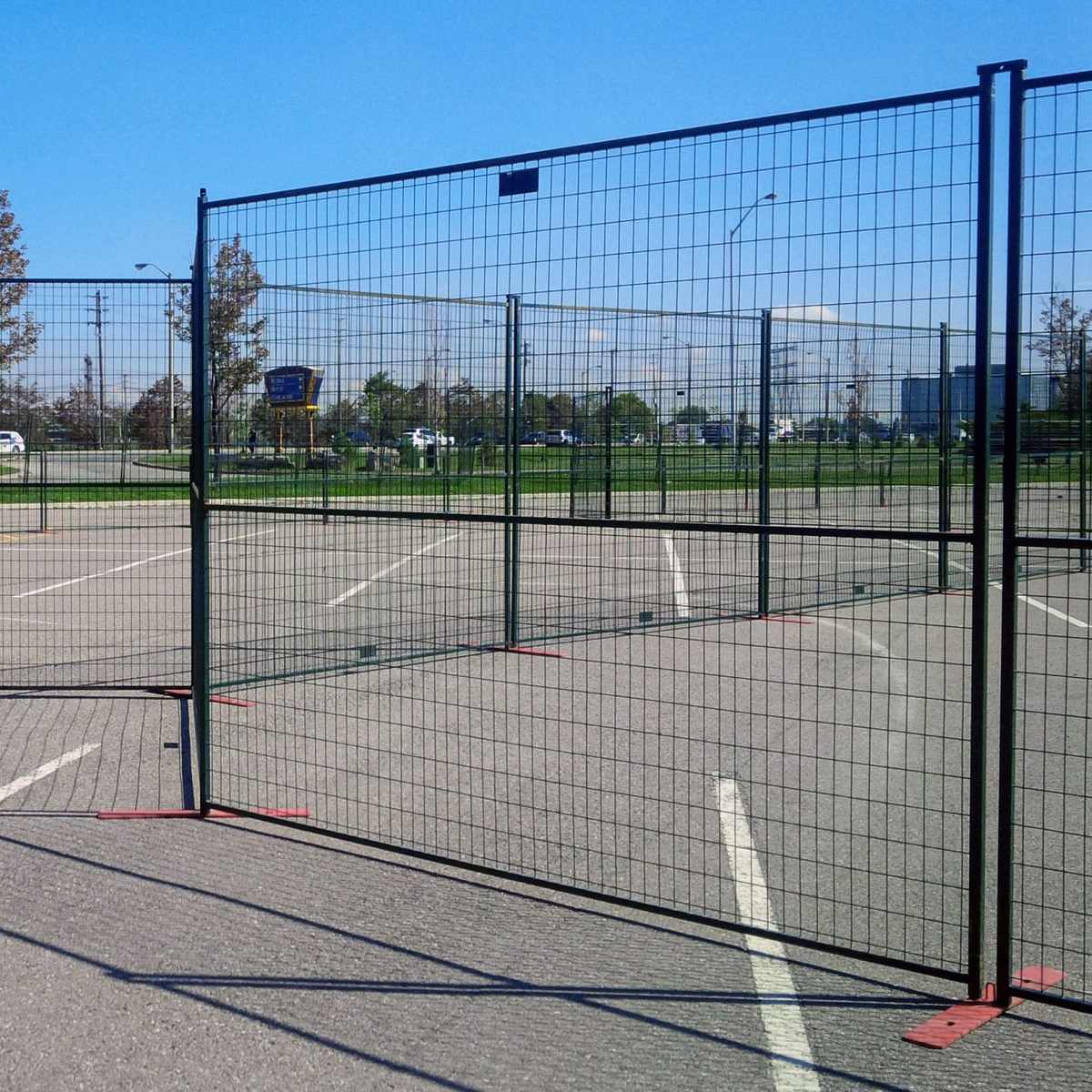

Why PVC Over Bare Steel
On an Australian site the panel spends months in sun and dust, is moved on a ute, and is expected to look presentable on a residential job. A PVC coated panel holds colour, does not stain hands, and does not show the marks that bare galvanised steel picks up in handling.
The coating is over galvanised wire, not instead of it: the zinc does the corrosion work and the PVC does the appearance.
Colour and Finish
Colour is chosen for visibility first: orange reads from a distance and is the default on road and civil work. Blue and green are used on residential and event sites where the fence should be less conspicuous.
The coating thickness matters more than the colour. A thin film abrades through at the couplers and the frame corners, and those are the first places to rust.

Base and Foot Options

Panels stand in blow moulded plastic feet, often filled with water or sand on site, or on concrete blocks where the surface will take the weight.
On a hard, smooth surface a plastic foot slides; a rubber-pad foot or a concrete block is the better choice there.
Panel Sizes
The common size is 2.1 m high by 2.4 m wide, with mesh around 50 x 150 mm. Height above 2.1 m adds wind load faster than it adds security.
Panel width is set by what two people can carry; wider panels mean fewer feet but slower handling on uneven ground.


Packing and Freight
Panels nest and stack flat, feet pack in matched counts. For a sea container the bundle count is set by weight, not by volume, because the frames are light but bulky.
Bundles are labelled by size; a mixed bundle costs more on site than it saves in freight.
What to Send

Send panel height and width, mesh size, wire diameter, coating colour, foot type, quantity, site surface and the port of discharge.


