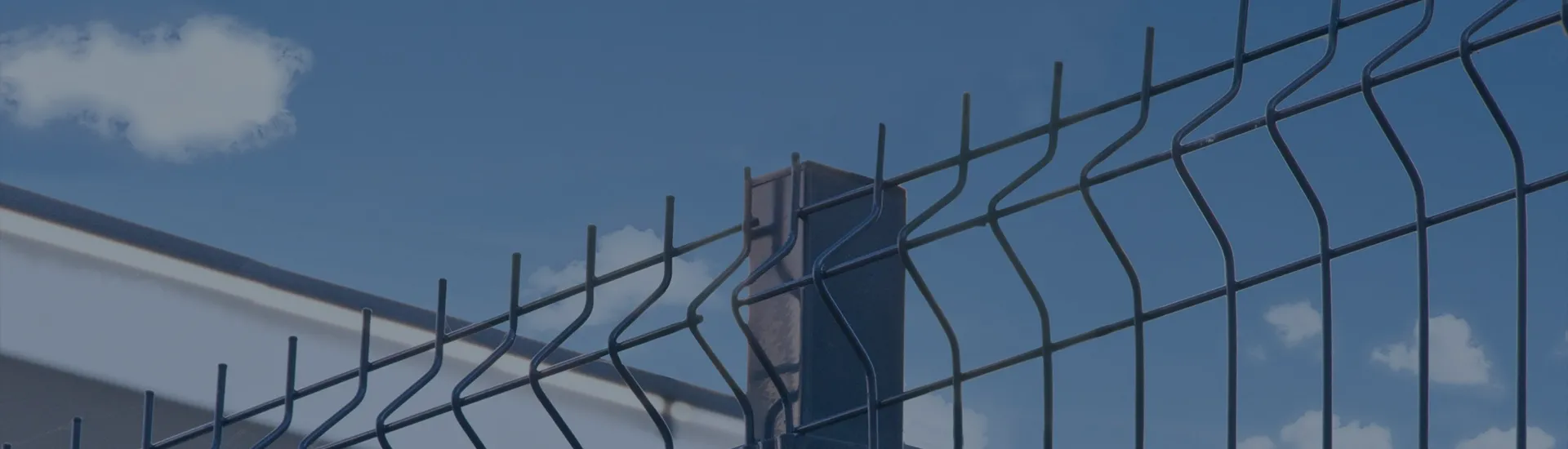
358 Security Fence
358 Security Fence
Hot Dipped Galvanised 358 Fence Mesh Panels


The Panel Is the Part You Cannot Fix Later
Posts can be re-set and clips can be replaced. A panel that arrives with the wrong aperture, a loose weld or a thin coating cannot be corrected on site, which is why the panel specification is settled before the order rather than at delivery.
How the Wire Is Galvanised
The wire is galvanised before welding, so the coating is already on the wire surface when the intersections are made.
A panel dipped after welding has zinc over the joint but the welding heat has already altered the wire at that point. A panel welded from pre-galvanised wire keeps a consistent coating along the wire and relies on the weld itself plus the treatment of the joint for protection there.
Either route can produce a serviceable panel. The figure that decides how long it lasts is the zinc weight, which is specified on the order and not visible on delivery.
Gate posts, hinges and latch are quoted against the leaf they carry, so the hardware and the gate arrive together.

What Welding Does to the Aperture

The aperture is fixed by the weld at every crossing. A 3 inch by 0.5 inch opening depends on those welds holding their position: one broken weld allows the wires to spread locally, and a spread aperture gives back the foothold the panel was specified to remove.
This is why a welded 358 panel is not interchangeable with a woven mesh of similar dimensions. The weave can be worked open; the weld cannot, short of cutting it.
Panel Sizes and Handling
Panel height is set by the containment requirement and panel width by what can be handled on site. A panel that is too wide for the access route is a handling problem, not a security one, and it is the most common reason a delivery has to be re-cut.
Height matched to the containment requirement
Width matched to the access route and the lifting arrangement
Folded edges so the panel can be handled without gloves
Panels banded in bundles that a small telehandler can lift


Packing for Sea Freight
Panels are stacked flat and banded, with edge protection between bundles so the coating is not rubbed through in transit. Posts are bundled separately and marked against the panel run they belong to.
Coatings are damaged in transit far more often than in service. A consignment that arrives with the bottom edge of each panel rubbed bare will rust from that edge, whatever the zinc figure on the order.
What to Send

Send the panel height and width, the aperture confirmation, the zinc figure required, the finish, the quantity, and the destination port.
Supply only outside China. Erection is by the client's contractor against our setting-out drawings.


